Quick Answer: Successful South Florida development projects are built on a chain of well-drafted contracts: joint venture and capital agreements, land purchase contracts with entitlement contingencies, design and construction contracts that allocate risk, surety bonds that guarantee performance and payment, construction financing documents, and pre-leasing or condominium sales agreements. Each contract should shift risk to the party best able to control it, comply with Florida’s lien, bond, indemnity, and condominium laws, and fit the project’s business structure.
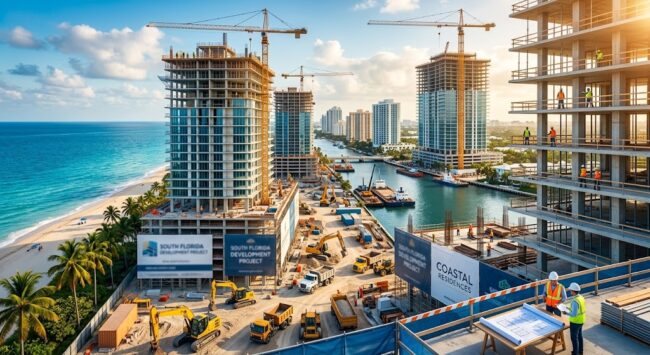
South Florida remains one of the most active development markets in the United States. Residential towers rise along Biscayne Bay and Brickell. Mixed-use projects transform former industrial corridors in Wynwood, Allapattah, and Little River. Logistics developers compete for land near the airport and the ports. Medical office, self-storage, and workforce housing projects fill gaps across Miami-Dade and Broward counties. Each of those projects depends on dozens of contracts among owners, investors, lenders, design professionals, contractors, subcontractors, sureties, tenants, and buyers.
When those contracts are drafted well, risk lands where it belongs and disputes are rare. When they are drafted poorly, a single gap can cost millions of dollars, delay completion for months, or put a developer’s capital at risk.
McArdle Franco PLLC, a Coral Gables law firm established in 2002, represents developers, property owners, contractors, subcontractors, architects, engineers, commercial tenants, and lenders in residential and commercial real estate projects. The firm’s senior partners built real estate, construction, and mortgage businesses themselves before and alongside their legal careers, which gives the firm a businessperson’s view of development risk. As a Miami land development law firm with an active litigation practice, the firm drafts documents with a clear understanding of how they will be tested if a dispute arises. This article walks through the key agreements in a South Florida development project and the issues each must address.
The Development Life Cycle and Its Contracts
| Project Phase | Key Agreements |
|---|---|
| Capital formation | Joint venture, operating, and private placement documents |
| Site acquisition | Purchase and sale contracts, option agreements, assemblage deals |
| Entitlements | Development agreements, public-private partnership agreements |
| Design | Architect and engineer professional service contracts |
| Financing | Construction loans, mezzanine debt, guaranties |
| Construction | Prime contracts, subcontracts, surety bonds |
| Leasing and sales | Commercial leases, condominium purchase agreements |
| Completion | Closeout documents, warranties, releases |
Each phase builds on the one before. Decisions made in the joint venture agreement affect who can approve change orders during construction. Contingencies in the purchase contract determine whether the developer can walk away if entitlements fail. Insurance and indemnity terms in the construction contract must match lender requirements. A Coral Gables real estate development lawyer looks at the project as a whole rather than one document at a time.
Capital Formation and Joint Ventures
Most significant projects combine a sponsor that brings expertise and a capital partner that brings equity. The joint venture agreement, usually an LLC operating agreement, defines the relationship.
Key Joint Venture Terms
- Capital contributions and the consequences of failing to fund capital calls, such as dilution or loans at penalty rates
- Distribution waterfall, including preferred returns and promote structures for the sponsor
- Major decisions requiring investor approval, such as budget changes, refinancing, sale, or replacing the general contractor
- Development and management fees payable to the sponsor
- Removal rights if the sponsor defaults or acts in bad faith
- Buy-sell and exit provisions to resolve deadlock
- Guaranty allocation for lender-required completion and carve-out guaranties
A South Fl joint venture real estate attorney helps both sponsors and capital partners negotiate these terms so that incentives stay aligned when the project faces cost overruns or market changes.
Isolating Liability
Developers commonly use a separate single-purpose entity for each project, with layered holding entities above it. This structure isolates each project’s liabilities, satisfies lender requirements, and allows different investors to participate in different projects. McArdle Franco’s business structuring practice designs multi-level structures that isolate profit centers and quarantine liabilities.
Raising Equity From Investors
When a sponsor raises equity from multiple investors, the interests offered are generally securities. Offerings are commonly made under Regulation D using a private placement memorandum or capital participation memorandum that discloses entitlement, construction, financing, and market risks. Accurate disclosure protects the sponsor if the project underperforms. Miami projects also frequently involve foreign investors, including participants in the EB-5 immigrant investor program, which requires minimum investments of $800,000 in targeted employment areas or $1,050,000 elsewhere under the EB-5 Reform and Integrity Act of 2022, along with job creation requirements and compliance obligations.
Site Acquisition
Purchase and Sale Contracts
Development land purchase contracts differ from ordinary real estate contracts because the buyer’s ability to build is uncertain at signing. Key provisions include:
- Due diligence periods for title, survey, environmental, geotechnical, and utility review
- Entitlement contingencies allowing the buyer to obtain zoning, site plan, or permit approvals before closing
- Extension rights tied to additional deposits
- Seller cooperation obligations to sign applications and attend hearings
- Deposit release terms, including whether deposits become nonrefundable at milestones
- Environmental representations and allocation of remediation costs
Assemblages
Urban infill projects often require combining several parcels from different owners. Assemblage deals must coordinate closing conditions so the developer does not acquire some parcels but fail to acquire others. Options, staggered closings, and cross-default provisions help manage that risk.
Entitlements and Local Regulation
South Florida’s regulatory environment varies widely by jurisdiction. The City of Miami applies its form-based Miami 21 zoning code. Miami-Dade County’s Comprehensive Development Master Plan includes an Urban Development Boundary that limits development in western areas. Coral Gables, Miami Beach, Fort Lauderdale, and other municipalities each have their own codes, design review boards, and historic preservation rules. Florida’s Live Local Act allows qualifying affordable and workforce housing projects to be approved administratively on commercial, industrial, and mixed-use land, subject to its requirements, which has changed the feasibility of many sites. Purchase contracts should allow enough time to understand which path a project will follow.
Development Agreements and Public-Private Partnerships
Developers working with local governments may enter development agreements under the Florida Local Government Development Agreement Act, which can lock in density, infrastructure obligations, and timelines. For projects involving public land or public facilities, Section 255.065 of the Florida Statutes authorizes public-private partnerships for qualifying projects, including procedures for unsolicited proposals, public notice, and comprehensive agreements. P3 agreements must allocate design, construction, financing, operation, and maintenance risks between public and private partners.
Design and Professional Service Contracts
Architects and engineers shape the project’s cost, schedule, and quality. Their contracts should address:
- Scope of services, including construction administration and site visits
- Fee structure and additional services
- Standard of care and limits on warranties
- Ownership and licensing of drawings and models
- Insurance requirements, including professional liability coverage
- Limitations of liability, which owners often resist and design firms often require
- Coordination with consultants and the contractor in design-build or design-assist models
Individual Design Professional Liability
Section 558.0035 of the Florida Statutes allows a design professional employed by a business entity to be shielded from individual liability for negligence if the contract contains a prominent statement to that effect, the entity maintains required professional liability insurance, and other statutory conditions are met. Owners should understand this provision when negotiating design contracts, and design firms should make sure their contracts satisfy it.
Construction Contracts
The prime construction contract is the most important risk allocation document on most projects. A South Florida construction contract attorney will consider the following choices.
Delivery Method and Pricing
| Delivery Method | Owner’s Risk Profile |
|---|---|
| Stipulated sum | Price certainty, but less flexibility for changes |
| Cost plus fee with GMP | Shared savings, price cap, transparency into costs |
| Cost plus fee without GMP | Flexibility, but owner bears cost risk |
| Design-build | Single point of responsibility for design and construction |
| Construction management at risk | Early contractor involvement, GMP set later |
Scope and Change Orders
Clear plans, specifications, allowances, and exclusions reduce disputes. Change order procedures should require written authorization, define pricing methods for added work, and address time extensions. Contractors should be required to give prompt written notice of claims.
Schedule, Delay, and Liquidated Damages
Contracts should set substantial completion dates, require schedule updates, and address delays caused by owners, weather, hurricanes, permitting, and supply chain disruptions. Liquidated damages for late completion must be a reasonable estimate of anticipated losses to be enforceable under Florida law. No-damages-for-delay clauses are generally enforceable in Florida, subject to exceptions for fraud, concealment, bad faith, and active interference.
Material Price Escalation
Volatile prices for steel, aluminum, concrete, roofing, glazing, and electrical equipment, including price changes driven by tariffs, have made escalation clauses common. These clauses should define the materials covered, the baseline price, the index or documentation required, and any cap on adjustments.
Indemnity and Insurance
Section 725.06 of the Florida Statutes limits indemnity provisions in construction contracts. To be enforceable, an indemnity covering the indemnitee’s negligence must contain a monetary limit that bears a reasonable commercial relationship to the contract and must be part of the project specifications or bid documents. Indemnity cannot require a party to indemnify another for that party’s sole negligence or intentional misconduct beyond statutory limits. Insurance requirements, including builder’s risk, general liability, auto, workers’ compensation, and owner- or contractor-controlled insurance programs, should be coordinated with indemnity terms and lender requirements.
Payment and Retainage
Construction contracts should define the payment application process, documentation such as lien waivers, retainage percentages and release conditions, and the owner’s right to withhold for defective work or unpaid subcontractors. Before any work begins on a private project, the owner must record a Notice of Commencement under Section 713.13. Payments made before it is recorded can expose the owner to double payment if subcontractors are not paid.
Dispute Resolution
Contracts should specify notice and negotiation procedures, mediation, and whether disputes go to arbitration or litigation, along with venue and fee-shifting provisions. Consistent dispute resolution clauses across the prime contract, subcontracts, and design contracts allow related claims to be resolved together.
Surety Bonds
Surety bonds protect owners, lenders, and subcontractors by guaranteeing performance and payment. A Florida surety bond attorney helps parties choose and enforce the right bonds.
| Bond Type | What It Guarantees |
|---|---|
| Bid bond | Bidder will enter the contract and provide required bonds |
| Performance bond | Contractor will complete the work per the contract |
| Payment bond | Subcontractors and suppliers will be paid |
| Subcontractor bonds | Performance and payment by key subcontractors |
| Lien transfer bond | Removes a recorded lien from the property |
Public Projects
Florida’s Little Miller Act, Section 255.05, generally requires contractors on public projects above statutory thresholds to furnish payment and performance bonds. Subcontractors and suppliers on public projects cannot record liens and rely instead on the payment bond, subject to notice deadlines and a one-year limit to file suit.
Private Projects
On private projects, an owner may require the contractor to furnish a payment bond under Section 713.23. A properly furnished and recorded payment bond can exempt the owner’s property from liens by lienors other than the contractor, shifting payment claims to the surety. Claimants must serve timely notices, including a notice of nonpayment to the contractor and surety within 90 days after final furnishing, and must sue within one year.
Enforcing Performance Bonds
Performance bonds, often on forms such as the AIA A312, require the owner to follow specific steps before the surety’s obligations are triggered, including notice of a conference, formal declaration of contractor default, and termination of the contract. An owner that skips these steps or fails to pay the remaining contract balance to the surety may lose bond protection. Sureties typically choose among completing the work, tendering a replacement contractor, paying the owner, or denying liability. Owners should consult counsel before declaring default.
Construction Financing
Construction lenders require extensive documentation and protection. Key issues include:
- Loan-to-cost limits and required equity contribution before loan funding
- Completion guaranties from the sponsor
- Non-recourse carve-out guaranties covering fraud, misapplication of funds, and bankruptcy
- Interest reserves and contingency budgets
- Draw procedures requiring inspections, lien waivers, and title updates
- Assignment of construction and design contracts to the lender
- Consent agreements from the contractor and architect agreeing to continue for the lender if the borrower defaults
Mezzanine lenders and preferred equity investors add another layer, with intercreditor agreements governing rights between senior and junior capital. McArdle Franco advises mortgage lenders and commercial lenders as well as borrowers, giving the firm insight into what each side needs.
Condominium Projects
Condominium development carries additional regulation under Chapter 718 of the Florida Statutes.
Pre-Construction Sales and Deposits
Developers must file required documents with the Division of Florida Condominiums, Timeshares, and Mobile Homes and provide buyers with disclosure materials. Buyers generally have a 15-day right to cancel after signing a purchase agreement and receiving required documents. Deposits must be held in escrow. Under Section 718.202, deposits above 10 percent of the purchase price may be used for construction costs only if the contract and disclosures permit it and statutory conditions are met.
Post-Surfside Requirements
Following the 2021 Champlain Towers South collapse, Florida adopted milestone inspection and structural integrity reserve study requirements for condominium buildings three stories or taller, along with stricter reserve funding rules. Developers must plan for these obligations, which affect budgets, association documents, and turnover.
Turnover and Defect Exposure
When unit owners take control of the association, the developer must turn over documents, funds, and plans. Associations often commission turnover reports that become the basis for construction defect claims. Strong construction contracts, warranties, and insurance help developers manage this exposure.
Commercial Leasing
Mixed-use and commercial projects depend on pre-leasing to secure financing. Leases with anchor tenants often include landlord work obligations, delivery deadlines, tenant improvement allowances, co-tenancy, and exclusive use rights. Lease delivery dates must be coordinated with the construction schedule, and landlord work obligations must be reflected in the construction contract. Delays in delivery can trigger rent abatement or termination rights for tenants.
Closeout and Warranty
Project closeout requires certificates of occupancy, final lien waivers, as-built drawings, operation and maintenance manuals, warranties, and release of retainage. Florida’s statute of limitations for construction claims is generally four years, and the statute of repose for latent defects was shortened in 2023 to seven years from the earliest of specified milestones, such as a certificate of occupancy. Developers should keep complete project records for at least that period.
When Disputes Arise
Even well-structured projects produce disputes. Common issues include payment and lien claims, delay and acceleration claims, change order disagreements, defects, surety claims, joint venture conflicts, and lender defaults. Because McArdle Franco’s litigators work alongside its transactional lawyers, the firm can evaluate disputes based on what the parties intended when the documents were drafted, and can use mediation, arbitration, or litigation as appropriate. The firm was named a Tier 2 firm in Miami for Litigation – Construction in the 2026 edition of Best Law Firms®.
A Developer’s Contract Checklist
- Form a single-purpose entity for each project with an appropriate holding structure.
- Negotiate the joint venture agreement before committing capital.
- Build entitlement contingencies into land purchase contracts.
- Choose a delivery method and pricing model that matches risk tolerance.
- Draft indemnity provisions that comply with Section 725.06.
- Require appropriate bonds and understand how to enforce them.
- Record the Notice of Commencement before work begins.
- Coordinate insurance across contractor, design, and lender requirements.
- Align leasing and sales commitments with the construction schedule.
- Preserve project records through the statute of repose period.
Frequently Asked Questions
What is the most important contract in a development project?
There is no single answer, but the joint venture agreement and the prime construction contract usually allocate the most risk. Both should be negotiated with the full project in mind.
Does a payment bond protect a private project owner from liens?
A properly furnished and recorded payment bond under Section 713.23 can exempt the owner’s property from liens by subcontractors and suppliers, who must instead pursue the bond.
Can a contractor be required to indemnify an owner for the owner’s own negligence?
Only within the limits of Section 725.06, which requires a monetary limit with a reasonable commercial relationship to the contract and inclusion in the project specifications or bid documents.
What should an owner do before declaring a contractor in default under a performance bond?
Follow the bond’s notice and conference requirements, formally declare default, and terminate the contract in accordance with its terms. Failing to follow these steps can release the surety. Legal advice is strongly recommended.
How are condominium buyer deposits handled in Florida?
Deposits must be held in escrow. Deposits above 10 percent of the purchase price may be used for construction only if the contract and disclosures allow it and statutory requirements are satisfied.
Can individual architects or engineers be sued personally in Florida?
Section 558.0035 can protect individual design professionals employed by a firm from personal liability for negligence if the contract contains the required statement and other statutory conditions are met.
Key Takeaways
- Development projects depend on a coordinated chain of contracts.
- Joint venture terms determine how cost overruns and disputes are handled.
- Florida law limits construction indemnities and governs lien and bond rights.
- Performance bonds require strict compliance before the surety must act.
- Condominium projects carry additional deposit, disclosure, and safety obligations.
About McArdle Franco PLLC
McArdle Franco PLLC is a Coral Gables law firm established in 2002 that counsels and represents businesses throughout Florida, across the nation, and internationally in land development and construction, real estate, business structuring, transaction structuring, and business litigation. The firm represents developers, property owners, contractors, subcontractors, commercial tenants, architects, engineering firms, mortgage lenders, and commercial lenders. The firm was named a Tier 2 firm in Miami for Litigation – Construction in the 2026 edition of Best Law Firms® and was ranked in Chambers USA 2025 for Litigation: General Commercial in Florida.
Contact McArdle Franco PLLC
Address: 255 Alhambra Circle, Suite 925, Coral Gables, FL 33134
Phone: (305) 442-2214
Website: mcardlefranco.com
This article provides general information and is not legal advice. Consult a qualified attorney about your specific situation.
Sources and Further Reading
- Florida Construction Lien Law, Chapter 713, Florida Statutes (including Sections 713.13 and 713.23) – Florida Legislature
- Public Construction Bonds, Section 255.05, Florida Statutes – Florida Legislature
- Public-Private Partnerships, Section 255.065, Florida Statutes – Florida Legislature
- Construction Contracts; Limitation on Indemnification, Section 725.06, Florida Statutes – Florida Legislature
- Design Professional Liability, Section 558.0035, Florida Statutes – Florida Legislature
- Condominiums, Chapter 718, Florida Statutes (including Sections 718.202 and 718.503) – Florida Legislature
- Florida Local Government Development Agreement Act, Sections 163.3220–163.3243, Florida Statutes – Florida Legislature
- EB-5 Reform and Integrity Act of 2022 – U.S. Citizenship and Immigration Services
- Miami 21 Zoning Code – City of Miami
- Land Development and Construction Practice – McArdle Franco PLLC
About the Author